

Why Rest Doesn’t Always Leave You Feeling Rested
Tanya Marie. 8 min read.
Why Rest Doesn’t Always Leave You Feeling Rested
You finally sit down.
Nobody needs anything from you for five minutes.
You should feel relieved.
Instead, your brain starts listing everything you haven’t done yet.
The washing.
The email.
The appointment.
The shopping.
The thing you promised you’d organise.
The thing you forgot yesterday.
The thing you absolutely cannot forget tomorrow.
Your body may have stopped moving.
But somehow, you still don’t feel as though you’re resting.
I know this feeling very well.
There have been plenty of times in my life when I technically was resting, but I certainly didn’t feel rested.
Because stopping what I was doing didn’t mean I stopped carrying everything I still had to do.
You Can Stop Without Actually Switching Off
We often think of rest as simply not doing anything.
Sit down.
Put your feet up.
Watch television.
Go to bed.
Take the afternoon off.
But there is a big difference between being physically still and actually feeling as though you can let go for a while.
You can be lying on the sofa while your mind is still running through tomorrow.
You can be watching television while mentally planning dinner.
You can be sitting in the garden while remembering three phone calls you haven’t made.
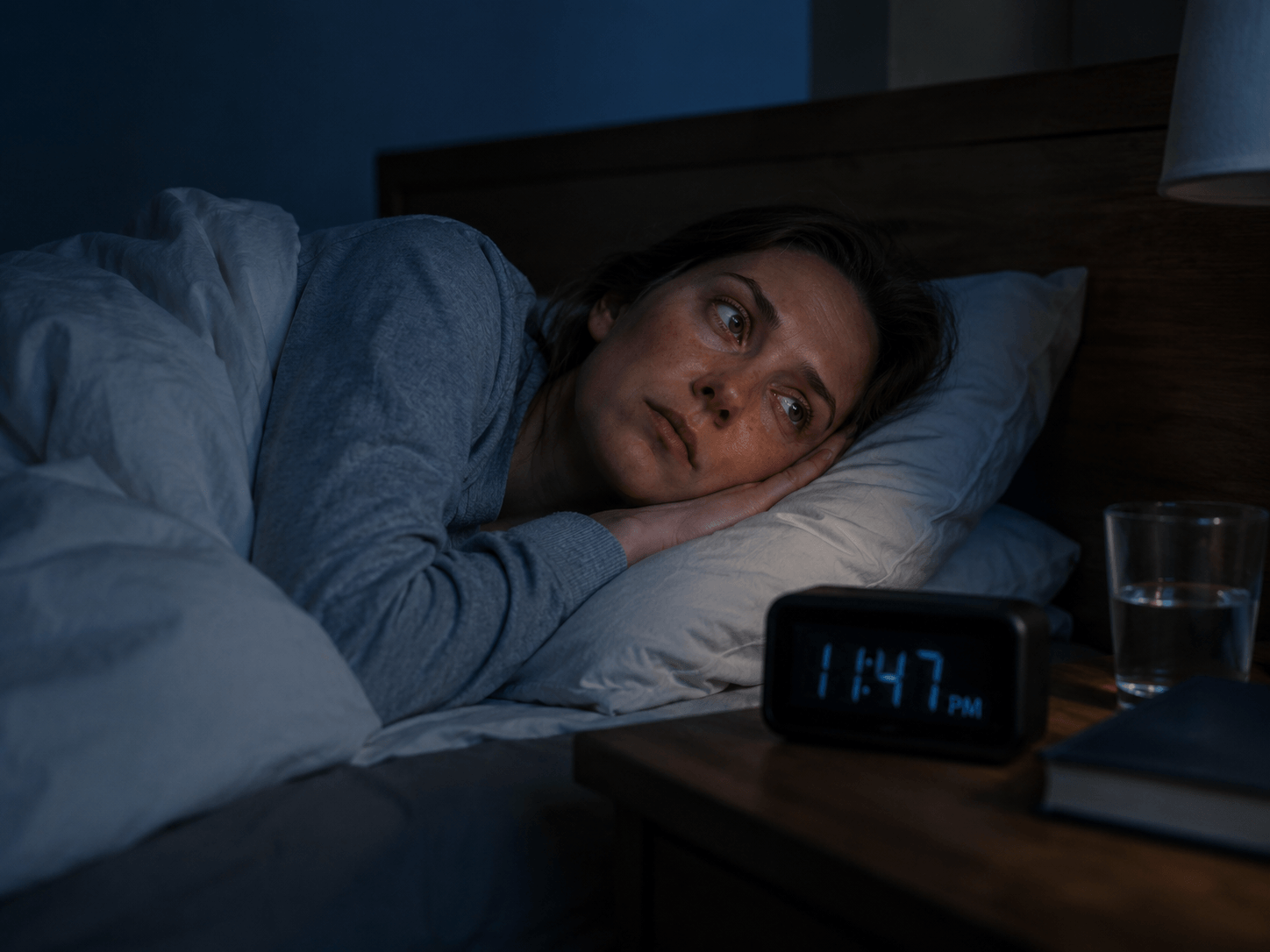
You can climb into bed absolutely exhausted and realise that every muscle in your body is still tense.
Sometimes I would get into bed at night and suddenly become aware that I was strung as tight as a bow.
My body was in bed.
But it certainly hadn’t received the message that the day was over.
The Jobs May Stop. The Remembering Doesn’t.
A lot of daily work has a visible beginning and end.
You wash the dishes.
You finish the school run.
You send the email.
You cook dinner.
But the mental side of life is much harder to turn off.
You may still be remembering.
Planning.
Anticipating.
Checking.
Worrying.
Rehearsing conversations.
Going over what happened earlier.
Thinking about what needs to happen next.
And unlike the washing machine, there isn’t always an obvious button you can press to make all of that stop
.
Sometimes the moment you become physically quiet is actually when your thoughts become loudest.
All the things you didn’t have time to think about while you were busy suddenly arrive at once.
Rest Can Come With a To-Do List Attached
Even when you finally get some time to yourself, it may not feel like yours.
Because somewhere in the back of your mind is the list.
I really should be cleaning.
I haven't done the washing.
I still need to go to the shops.
I should answer those messages.
I haven't organised that appointment.
I haven't finished everything yet.
And of course, when is everything ever finished?
That was certainly one of my problems.
There was always more to do.
The list didn't reach the bottom and politely announce:
Congratulations. You may now rest without guilt.
There was always another job waiting.
Which meant that if rest was only allowed once everything was done, rest was never really going to happen.
Then There’s the Guilt
This is something that doesn’t get talked about enough.
Even when you can rest, you may not feel comfortable doing it.
You sit down and immediately feel guilty.
You look at the mess around you.
You think about what everybody else is doing.
You remember all the things that still need attention.
Instead of enjoying the break, part of you is arguing with yourself about whether you deserve to be having it
.
And sometimes that guilt doesn’t even come entirely from you.
Maybe you've had family or friends make comments.
Must be nice.
You've got time to sit down?
I don't know how you can relax when there's all that to do.
Or perhaps nobody needs to say it anymore because you've heard versions of it often enough that you've learnt to say it to yourself.
Rest begins to feel indulgent.
Lazy.
Something you have to earn.
And if you haven't completed everything, you haven't earned it yet.
The trouble is, your body may desperately need a break long before your to-do list is finished.
Women Can Become Very Good at Being “On”
For many women, particularly during the years of work, children, family responsibilities and running a household, there can be very little true off-duty time.
You're not only doing your own jobs.
You're often the person who knows what everyone else needs.
Who needs to be where.
What needs to be bought.
What needs to be washed.
What is happening at school.
Which birthday is coming up.
Who needs new shoes.
Whether there is enough milk for tomorrow.
Whether that bill was paid.
Whether someone remembered to take something with them.
Even when nobody is directly asking you for anything, part of your attention can remain on standby.
And standby isn't quite the same as rest.
Sometimes you don't realise how constantly alert you've been until, for a moment, nobody needs you.
And then you discover you don't actually know how to switch off.
“But I Did Nothing All Weekend”
This is where things can become confusing.
You may have had a quiet weekend.
Perhaps you stayed home.
You didn't work.
You didn't go anywhere.
You even had a sleep-in.
And Monday arrives and you're still tired.
So you think:
What is wrong with me? I rested.
But perhaps what you had was inactivity, not necessarily rest.
Maybe you spent the weekend scrolling.
Maybe you were worrying about Monday.
Maybe you were catching up on household jobs.
Maybe you were surrounded by people needing things.
Maybe you felt guilty every time you sat down.
Maybe your mind never stopped going.
Maybe you were physically exhausted enough to stay still, but not relaxed enough to genuinely settle.
Simply doing less doesn't automatically mean you feel restored afterwards.
Your Brain Hasn't Gone on Holiday Just Because You Sat Down
The brain is an energy-demanding organ even when we're physically at rest.
But I wouldn't reduce this to a simple equation of more thoughts = dramatically more calories burned.
If that were the case I would still be super thin!
That's not really how it works.
The more useful point is much simpler:
Your mind can remain extremely active even while your body is doing very little.
You're still monitoring.
Remembering.
Anticipating.
Problem-solving.
Worrying.
Replaying.
Planning.
So when somebody says, “But you've been sitting there for an hour,” that doesn't necessarily tell us whether you experienced the hour as restful.
A body on a sofa and a mind juggling fifteen unfinished concerns can coexist perfectly well.
Sometimes Rest Feels Unsafe Because There’s Too Much Waiting
There can also be a strange discomfort in stopping when you know there is so much waiting for you.
You sit down, but you can't relax because you know the jobs haven't disappeared.
They're waiting.
You can almost feel them sitting there.
And the longer you rest, the more behind you imagine yourself becoming.
So even your break contains a sense of urgency.
I should get up.
I've wasted enough time.
I need to get moving.
You may even find yourself unable to enjoy something you normally like because part of you is already thinking about when you need to stop enjoying it and get back to work.
That isn't much of a break.
“Why You Can Still Feel Tired After Resting or Sleeping”
Sleep is essential, of course.
But sleep and rest aren't exactly the same thing.
You can go to bed exhausted and still struggle to wind down.
Your thoughts race.
You replay conversations.
You mentally organise tomorrow.
You remember something important just as you're about to drift off.
You start thinking about something that happened five years ago for no apparent reason.
And even if you do sleep, you may wake feeling as though you haven't fully settled.
Sleep problems and persistent fatigue can have many causes, so ongoing issues are worth discussing with a qualified health professional.
But from an everyday-life perspective, it makes sense that going from full speed directly into bed doesn't always produce an immediate feeling of ease.
Sometimes we expect ourselves to go from:
doing, thinking, organising, reacting, remembering
straight to:
sleep.
With no transition at all.
Why “Rest More” Can Feel Like Useless Advice
Telling an overwhelmed person to “just rest” can be a bit like telling someone with a completely full suitcase to “just fit one more thing in.”
Rest itself may become another task.
Now you're supposed to:
schedule rest,
protect your rest,
do the right kind of rest,
create a bedtime routine,
meditate before resting,
journal about why you aren't resting,
track your sleep,
optimise your evening.
Suddenly relaxing has become a project.
For me, this was part of the problem with many things that were supposed to help.
Some of them were good.
But they were still something else I had to remember to do.
When I was already struggling to get through everything I had to do, I couldn't always add another routine simply because it was labelled “self-care.”
And when I didn't keep it up?
There was another opportunity to feel like I'd failed.
Rest Doesn't Have to Be Another Achievement
Perhaps one of the most helpful shifts is letting go of the idea that you need to rest properly.
You don't need to achieve perfect relaxation.
You don't need an empty mind.
You don't need forty uninterrupted minutes and a beautiful room.
You don't need to emerge from every break transformed.
Sometimes rest may simply mean creating a little space where you are not actively asking more of yourself.
Five minutes where you aren't fixing anything.
One song without multitasking.
A cup of tea without using the time to answer messages.
Sitting outside without turning it into your opportunity to make another list.
A few moments where you don't have to improve, organise or accomplish anything.
Sometimes Familiar Is Easier
This is one reason I became interested in using music.
Music didn't feel like another self-improvement task.
I already listened to it.
If I loved a song, I would happily play it repeatedly.
I didn't have to learn how to enjoy music.
I didn't have to remember a complicated sequence.
And I didn't have to wait until I had completed everything else first.
I could listen while doing things I already needed to do.
Or I could simply sit and enjoy it when I did get a little time to myself.
That led me to wonder:
What if something intended to help me feel calmer didn't have to feel like more work?
What if it could fit around life rather than requiring life to make room for it?
That idea became part of the thinking behind The Sanctuary Collection.
Rest May Begin Before You Stop
We tend to imagine rest as something we do once the work is over.
But if the work is never completely over, perhaps waiting for that point isn't particularly helpful.
Maybe small moments of ease need to happen inside life, not only after we've finished it.
A song while you're making dinner.
A few quiet minutes in the car before you go inside.
Sitting for a moment before beginning the next task.
Letting somebody else do something without correcting the way they do it.
Leaving one thing until tomorrow.
Not filling every empty moment with your phone.
None of these things will magically remove every responsibility.
But they may give you something that an endless to-do list doesn't:
a little breathing room.
If You Feel Guilty Resting, Notice the Rule Behind the Guilt
Sometimes it helps to ask:
What rule am I following here?
Perhaps the rule is:
I can rest when everything is done.
Other people should come before me.
If someone else is working, I should be working.
Being busy means I'm useful.
Resting is lazy.
I haven't done enough yet.
You don't necessarily have to argue with the rule or replace it with a perfect affirmation.
Just noticing it can be revealing.
Because sometimes we've been obeying a rule for years without ever consciously deciding whether we believe it.
You May Also Be Carrying More Than You Realise
If this sounds familiar, it may connect to something I wrote about in Why Do I Feel Overwhelmed When Nothing Is Actually Wrong?
Sometimes the reason rest doesn't feel very restful is that there is simply too much still being carried mentally - even when nothing dramatic is happening.
When your mind is responsible for remembering, anticipating and managing dozens of small things, stopping your physical activity doesn't automatically put all of that down.
And sometimes recognising the size of the load is the first step towards understanding why you're so tired.
Rest Doesn't Need to Wait Until You Deserve It
You do not have to finish every job before you are allowed to stop for a few minutes.
The washing will create more washing.
There will be another meal.
Another email.
Another appointment.
Another thing somebody forgot to tell you until the last possible moment.
Life keeps generating work.
If rest is the prize you receive when everything is finally finished, you may spend years waiting for it.
Perhaps rest doesn't need to be something you earn.
Perhaps it can simply be part of being a person who has been carrying a lot.
And perhaps the goal isn't always to become completely relaxed.
Sometimes the first step is much smaller:
to stop adding guilt to the few moments when you finally stop.
If this feels familiar…
When life has felt heavy for a long time, even helping yourself can feel like one more thing to do.
The 7-Day Sanctuary Experience was created to feel different - original music, gentle Sanctuary Touch™ and a simple daily practice designed to help you feel less overwhelmed, more emotionally steady, and a little more like yourself again.
You don’t have to fix everything first.
You can simply begin here.
Frequently Asked Questions
Why don't I feel rested even when I haven't done much?
Physical inactivity isn't always the same as feeling rested. Your mind may still be planning, worrying, remembering, anticipating or carrying unfinished responsibilities even while your body is still.
Can stress make it difficult to relax?
Yes. When you've spent a long time feeling busy, pressured or constantly responsible for what needs to happen next, it can be difficult to suddenly switch into a relaxed state simply because you've sat down.
Why do I feel guilty when I rest?
Many people have absorbed beliefs that rest needs to be earned, that productivity determines their value, or that they should only stop once everything is finished. Family expectations and previous criticism can reinforce those feelings.
Why does my brain race when I finally lie down?
Quiet moments often remove the distractions that kept thoughts in the background during the day. Once external activity stops, unfinished worries, plans and reminders may become much more noticeable.
Is lying on the sofa actually rest?
It can be. But whether it feels restful depends on more than your physical position. If you're tense, scrolling constantly, worrying about unfinished jobs or feeling guilty for stopping, you may not experience that time as particularly restorative.
How can I make rest feel more restful?
Start small. Rather than turning rest into another routine to perfect, try creating short periods where you aren't asking anything more of yourself. Reduce extra input, put aside the to-do list temporarily, listen to something familiar, or simply allow a few minutes to be unproductive.
Persistent exhaustion, significant sleep problems or ongoing changes in mood or functioning can have many causes. If these are affecting your everyday life, it is worth discussing them with a qualified health professional.

Tanya Marie is the creator of The Sanctuary Collection™, a collection of multi-sensory, music-based wellbeing experiences combining original songs with gentle Sanctuary Touch™
Her work grew from her own decades-long experience of chronic exhaustion and overwhelm, and from searching for something that could genuinely help without becoming another complicated routine to keep up with.
When nothing quite suited, or worked, she began exploring a different approach: using music she would naturally want to return to, combined with simple gentle touch and practices that could fit into everyday life.
What began as something she created for herself eventually became The Sanctuary Collection™ - designed to help women feel better, build greater resilience to everyday stress, and feel more like themselves again without adding more pressure.
The Sanctuary Collection™
Multi-sensory programs combining original music, gentle touch and simple daily practices to help you build greater resilience, shift long-held patterns and create meaningful change - one song at a time.